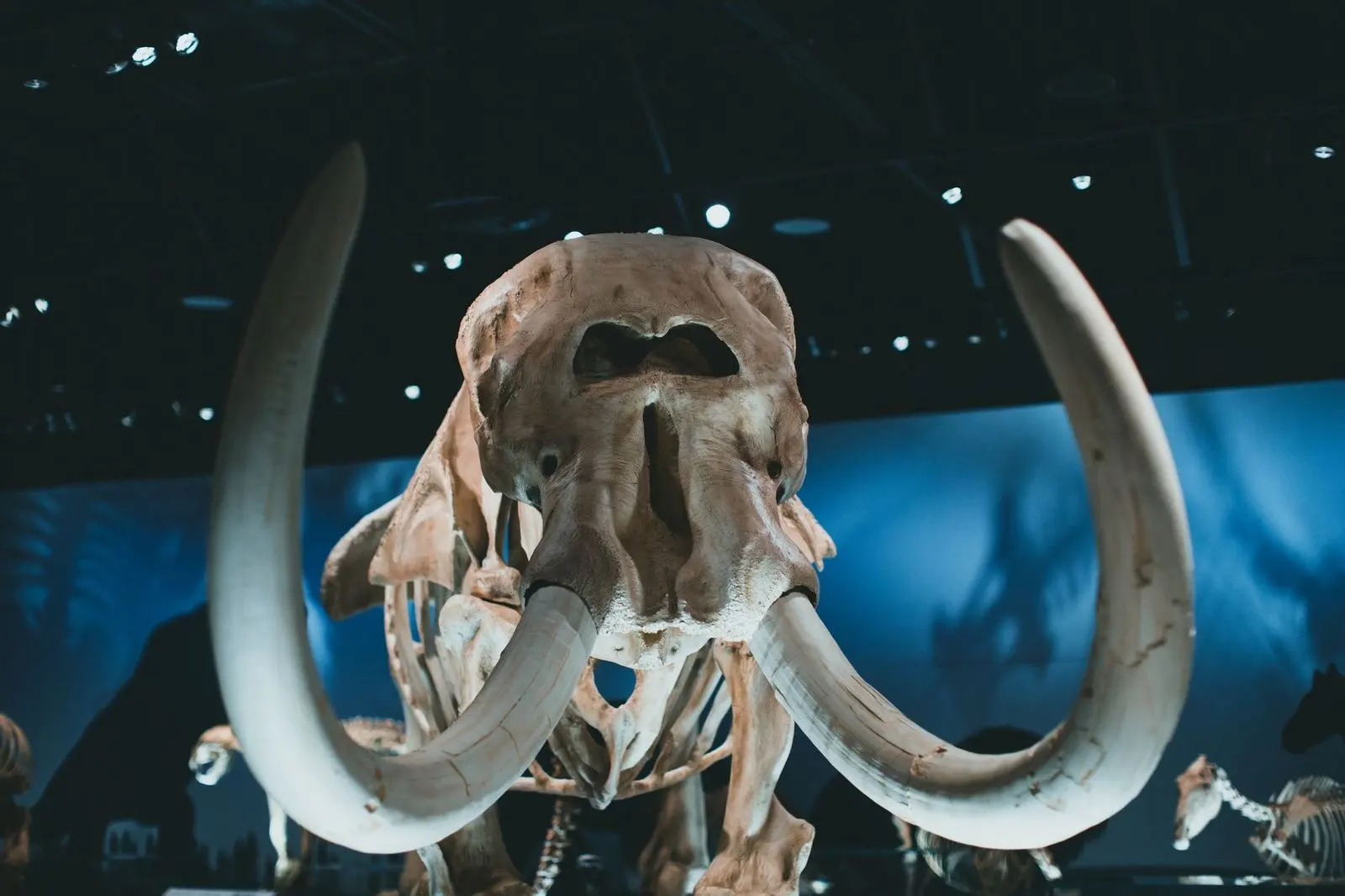
You may wonder how a giant that big vanished so fast. The Steller’s sea cow extinction took under three decades after its discovery, mainly because hunters killed far more than slow-breeding herds could replace.
This page is part of the site’s collection of extinct animals, and it follows one marine giant of the North Pacific.
| Item | Value |
|---|---|
| Year Georg Steller found the animal | 1741 |
| Year it had vanished | 1768 |
| Time from discovery to the last known animal | 27 years |
| Estimated maximum length | 30 feet |
| Estimated maximum weight | 22,000 pounds |
| Sustainable harvest in one population model | 17 individuals a year |
The figures above come from National Geographic’s feature on the sea cow and its report on the Turvey and Risley hunting study. They rest on historical records and researchers’ estimates, so they can change: check the sources before you rely on them.
Steller’s sea cow at a glance
Steller’s sea cow (Hydrodamalis gigas) was a sirenian, the group that also holds dugongs and manatees. The Natural History Museum says its closest living relatives are those two animals, yet it had specialised for the sub-arctic waters of the northern Pacific while sirenians elsewhere stayed in the tropics.
Reports of its size differ. National Geographic estimates that a fully grown animal reached up to 30 feet and as much as 22,000 pounds, while the Natural History Museum gives up to 10 metres and up to 11 tonnes.
By the time Europeans arrived, the animal survived only around the Commander Islands in the Bering Sea, even though its range had once spread across the North Pacific, according to Wikipedia. After the last Ice Age, rising seas broke up the kelp forests it fed on and left the herds isolated from one another, National Geographic explains.
How a shipwreck revealed it to science
The story begins with a disaster. On November 8, 1741, naturalist Georg Wilhelm Steller walked along the shore of an unnamed island, National Geographic recounts. His crew’s ship had been wrecked, stranding them on a barren island later named Bering Island.
The meat of a sea cow was flavorful, nourishing and kept remarkably well, and with its help the crew survived the harsh winter, says National Geographic. Forty-six of the seventy-seven crew members lived through their months on the island.
Steller studied the animals closely, and Wikipedia notes that much of what is known about their behavior comes from his posthumous publication On the Beasts of the Sea. He described herds that raised their young collectively, keeping calves at the center of the group with adults around them, per National Geographic.
Why was it such easy prey?
Almost every part of the animal’s life made it simple to hunt, according to the Natural History Museum. These weaknesses stand out:
- A kelp diet forced it into shallow water, as the Natural History Museum describes.
- Its social behaviour meant it did not hide away, and its thick blubber kept it close to the surface, per the same museum story.
- On its island it had no natural enemies and never learned to fear humans, National Geographic reports.
- It was too slow to escape and could not breed fast enough to replenish its losses, says the University of Texas Marine Science Institute.
Humans had hunted it long before Europeans did. National Geographic points to archaeological evidence of sea cows as food and says the Aleuts dismissively called them “women’s game.” The same feature adds that the animal’s fat could also be burned as lamp oil, a detail the University of Texas Marine Science Institute also records.
Bering’s stranded crew lacked that experience, so early catches were hard: the hide was thick and the fat beneath it nearly eight inches deep. They eventually learned to harpoon the animals and drag the bodies ashore with ropes, according to National Geographic.
How hunting emptied the coast so quickly
Word of the tender meat spread fast. Fur traders sailing from Siberia to the Alaskan coast made a habit of stopping at Bering Island to fill their barrels, National Geographic says. With no time to learn harpooning, they shot and speared the animals in staggering numbers.
Nobody kept a proper tally, and National Geographic’s report says hunters did not record precisely how many animals they killed. The nineteenth-century naturalist Leonhard Stejneger made rough estimates anyway. Researchers Turvey and Risley later combined them with what is known about living dugongs to ask whether hunting alone could explain the loss.
Their model produced three headline results:
- Sustainable harvest: from a starting herd of 1,500 individuals, only 17 individuals a year could have been taken safely, per National Geographic.
- Estimated take: the yearly average was about 123 individuals, far above that safe level, according to the same report.
- Revised start: at Stejneger’s kill rate the animals would only have lasted until 1756, so the authors judged a starting population around 2,900 animals more likely, as National Geographic relays.
Those numbers show why the herd could not hold on. The University of Texas Marine Science Institute says only a couple of thousand animals existed at discovery, and other expeditions often killed far more than they needed. Wikipedia sums up the outcome: within 27 years of European discovery, the easily caught mammal had been hunted out for meat, fat and hide.
Treat the modelling with care. National Geographic’s author notes that Stejneger’s calculations have not been verified and that the starting population and kill rate rest on assumptions that can’t be checked. Even so, the same report sees no reason to doubt that hunting played a major role.
Did sea otter losses play a part?
Some researchers proposed an ecological chain reaction. Sea otters were prized for their pelts, and as they were killed, populations of the sea urchins they eat exploded, according to National Geographic. The urchins then grazed shallow-water kelp unhindered, and the sea cow relied on kelp for food.
A later National Geographic feature tells a similar story for Bering Island, where hunters drove the sea otters out and urchins devoured the kelp forests that once fringed the shore. The sea cows then faced the loss of their food as well as the hunters’ guns.
The timing matters, though. Turvey and Risley concluded that the otter-urchin effect on sea cows between 1741 and 1768 appears to have been minimal compared with hunting, National Geographic reports. The same report suggests the idea may be better tested for the earlier period, when the species was already shrinking, a stage their paper did not examine.
What its loss left behind
Nobody at the time grasped what was happening. Neither Steller nor his contemporaries possessed a concept of extinction, National Geographic explains, so many believed the sea cows had simply withdrawn to a distant island.
The disappearance only made the species more coveted. Fur traders gathered the scattered remains along the shore, packed them into barrels and sold the bones to collectors for high prices, per the same feature.
The Natural History Museum calls it the first sea mammal in modern times to be made extinct by human ignorance and greed. The speed of the collapse also suggests, in the museum’s words, that the animals were probably never that numerous to begin with.
Turvey and Risley argued that the sea cow’s fast loss to small groups with simple weapons lends credence to the controversial “overkill hypothesis” for Pleistocene megafauna. National Geographic’s author cautions that even if humans delivered the final blow, we must ask why those species were confined to small populations in the first place.
For another extinction mystery from a very different era, see the page on what killed the saber-toothed tiger. Species that survive only under human care sit in a separate category, which the guide to extinct in the wild animals explains.
Frequently asked questions
When did Steller’s sea cow go extinct?
Show answer
Sources place the end at 1768, only a few decades after the shipwreck that revealed the animal, as the University of Texas Marine Science Institute records.
Why was even light hunting too much for it?
Show answer
The animal reproduced slowly. Turvey and Risley’s modelling, reported by National Geographic, found it could sustain only a very light level of hunting.
Was it bigger than a whale?
Show answer
The Natural History Museum says it was larger than many modern whales, though length and weight estimates differ between sources.
Did any other scientist see it alive?
Show answer
None is recorded. The Natural History Museum calls Steller the first and only scientist recorded to have seen the animals alive, and the University of Texas Marine Science Institute says he was the only scientist to describe it.