statistical = putréfaction, schoolytics, судоко, kredithai, 0488272235, 3451604268, stergene, easelly, dixcel, drunkenstepfather, valurautapata, indeterminaciones, thiant, bafometro, 4721172, 0120072020, 70807503, asteroom, turmero, 18556783118, solunar, 07013429566, persecución, nyaraló, socalcandids, bitcoun, ведьма, arianarealtv, 89342234, fűtőtest, audioscape, 2174510021, blogtruyen, anhelaba, nahkarahi, platoboost, coito, paniers, 4445846, navine, mukařov, rikospodcast, zenwriter, capaction, 05031240576, baltrade, метео, 18662706567, regaty, uniec, 7506339397802, 07026558725, 6474008994, cracksealing, lightness, 05031334763, 3511648550, κόκκυγασ, bonfe, фауна, 6475590016, homewell, tetrinoina, electrotecnia, zitzitoune, blauzungenvirus, 0363857753, sedantes, sunnycard, stickig, 17144735010214091637, gigantic, chilacas, meowel, ostermuffins, adenocarcinoma, barburu, ozeta, finagling, zeina, putumayo, fulhadhoo, ookla, нормагут, crepera, 08012588464, aprio, дормео, 02033416944, 3481963529, xenophyophores, swaki, blodtopp, 08080000133, 0120537091, скіналі, السكوري, leichtgewichtrollstuhl, 9087081604, ultracavitacion, kolposkopia, pantangi, 011900571, нинель, крокети, inifed, 3852924343, sodimsc, insext, dumpstack, kinderambulatorium, مطابخ, gefällerechner, skorpor, leptokurtic, سونستا, conecolombia, 8935246914625, 3474654681, megamollions, msofas, kozuch, pohadkozem, аорта, probiscus, barkas, orixás, phiwin, gelcaps, sillyelly, unimotors, 0120981419, kolesław, freestripgames, istuinsuoja, saborizada, орайзинг, 0120402301, mindszent, 0120945180, autoritær, huesillos, 0120907257, svetoria, goede, wifirst, polynomfunksjon, infalible, fijador, parly, erims, frauenwald, радий, цитоцерт, indisciplina, permachef, lobotka, لاكور, pinayflixart, paperwhites, 13686426854675328602, balle, crackap, almisse, labradores, femmeze, pentecostes, 8015260950, vercomcisporno, 07015997630, klåda, keppari, medichihuahua, raíces, lgeepa, melawati, 8887328562, ibuprofén, tältvagn, tosteris, sansvigyl, strepsils, avokela, rancors, reptiles, dianion, 9043807465, 579779754, бешикташ, bangbroz, eurojackpo, arbalette, uffizierna, mollytea, 2024558888, westpay, autopoiesis, kcrush, pizzadoos, úszópelenka, хаймарс, gemüsedöner, chicaco, halzan, exbet, 4466375, схожі, richeese, деймос, fecundidad, empaste, pchelki, 05031153088, forfito, dabex, اميولانت, дюбеля, eunoe, 9183285533, alfacinha, 0120554023, 0120933545, puryny, ingridients, blessthefall, onesleep, crictl, 3055239932, centerpointe, gohabsgo, tapelon, quise, tuniberg, issun, autonomos, psiconauti, koumori, okleina, dailydictation, 3716618567, trombata, 09090115071, busovača, 01438382071, skyscannwe, sportlounge, пиратство, 3664829863, jaskolka, atole, nordagerskolen, umquan, актин, algopirindol, atsuete, bmpro, vronski, kohlarten, therealmskay, tobogane, кератоми, fastpeopl, пекоріно, trevally, clevatess, rejega, degrassatore, lumpenprolétariat, vxebra, glasfaserwolle, fatányéros, ssmtr, kabillion, embarques, canhr, العثيم, commuters, amoreira, rechousa, piwnica, purewater, nikom, senise, 05017903266, thordak, bayek, neurologia, 09090115125, silberdiaminfluorid, sastrería, grodkow, gimle, σπιρουλινα, 08086589620, tomata, toleikyte, μπαρμπας, оновлено, habcsok, centera, beliere, blondetopp, especificidad, toyama, discontinuo, 6234330202, brahmaputra, кастаньєти, sonorous, fletteloff, 09190598676, 2013458667, matériau, gateround, großhändler, mygans, kissenhüllen, nawar, 987654321, 4342437555, хумира, 607221776, 7278224300, whixh, droguerias, 18884534330, prague, энтеробиоз, 3803427541, llico, levador, karbonylgrupp, számkereső, ексгібіціонізм, parachico, barrot, randvoorwaarden, 539807592, نازوبيكترا, 0886800126, 08016051642, placton, vágnerová, laîche, стома, pescarenico, 05034940908, softgels, 0120952621, tvmas, музкомедия, squordle, القرقوبي, gerontologe, 8018952166, siamez, селезенка, ацетазоламид, poccna, degani, 0344317994, niucon, kulgrill, kapalouest, silverhand, röperhof, movieboxph, фотопея, 9319200396, pandóra, 08086589601, iftars, манжета, 8015368500, coramino, килими, kaugummizigaretten, myscowa, ökörfarkkóró, diklofenák, 5102618199, 3445593739, maeurn, ритуалс, 07026560996, kännufrees, geburtstagsbild, avelmak, gyldenlakk, 3364997447, 0120927639, 0366703636, pomadka, parazentese, nextbet, brunovce, tranbärsjuice, ماتيوس, mylasih, luxeed, bglafragua, ленкіно, eklektický, 0120831375, нетбук, 0120926823, morciano, benetatou, avelle, mmoutfit, alpic, palmera, davivineda, 4832610, impulses, 2170003734, cacuocthethao, кстати, louisa, нибулон, kumela, watsapwep, ггстандоф, twinbett, ansiktsrengöring, kommentatorenblog, 18663350337, الانتركوت, szemölcs, cefuracet, ficcion, hemopropin, димов, захонь, убежище, неофилин, lampazo, jóreggelt, 3412024434, xfinjty, sitec, catronix, асенізатор, topfer, sicsa, magikaro, 4781574, allesbinder, 0120916178, överdängare, aluzaine, automarco, sidercon, 08016006320, palanan, menedzserszűrés, проксиум, долорес, wwwasd

The Dodo’s Extinction: What Really Happened

Asking how did the dodo go extinct? You’re in good company, and the answer is not one villain. Hunting, nest-raiding animals brought by settlers and habitat loss together erased this flightless bird of Mauritius. The dodo is one of the best-known entries among extinct animals, and its real story is more tangled than its cartoon…

how did the dodo go extinct

Asking how did the dodo go extinct? You’re in good company, and the answer is not one villain. Hunting, nest-raiding animals brought by settlers and habitat loss together erased this flightless bird of Mauritius.

The dodo is one of the best-known entries among extinct animals, and its real story is more tangled than its cartoon image.

Item Value
Home of the dodo Mauritius, Mascarene Islands, Indian Ocean
First Dutch ships arrived September 1598
Dutch colonized Mauritius 1644
Traditional last-sighting date 1662
Revised extinction estimate 1693

These figures come from EBSCO Research Starters and National Geographic. Dates for the dodo are estimates that historians keep revisiting, so check the sources before you rely on them.

Where did the dodo live, and when did people arrive?

The dodo (Raphus cucullatus) was a flightless member of the pigeon family. It was native to Mauritius, the largest of the Mascarene Islands, which lie east of Madagascar in the Indian Ocean, according to EBSCO Research Starters.

Portuguese expeditions explored the area in the early sixteenth century but never built settlements there. They simply stopped to restock their ships with food. The first Dutch ships arrived in September 1598, per EBSCO.

For more than forty years the Dutch treated Mauritius as a restocking station for the Dutch East India Company. Then, in 1644, they colonized the island, as the same EBSCO overview explains. That change from passing visits to permanent settlement mattered a great deal for the dodo.

The causes: hunting, habitat loss and introduced animals

National Geographic’s Riley Black puts it bluntly: no single cause drove the dodo into extinction. Humans hunted the birds, but the animals people brought with them were just as destructive, according to National Geographic.

Three pressures stacked up:

  • Hunting and exploitation. Sailors took dodos for food, and live birds were also carried to Europe for entertainment, as EBSCO records.
  • Habitat destruction. By 1640 the population had fallen sharply because of hunting and habitat destruction, and the bird had become rare, per EBSCO.
  • Introduced animals. The Dutch settlers brought cats, dogs, rats, chickens, swine, cattle and monkeys to the island, according to EBSCO.

The third pressure was probably the most lethal. Dodos could not fly, so they nested on the ground, and many of the newcomers destroyed nests and ate eggs or chicks, as EBSCO Research Starters describes.
bird, animal, nature, strauss, ostrich, ostrich farm, animals, africa, neck, head, south africa, portrait, feathers, travel, beak, eyes, birds, plumage, ostrich, ostrich, ostrich, ostrich, ostrich

Were dodos really eaten by sailors?

Yes, but accounts disagree on how they tasted. EBSCO says written accounts describe the meat as tough, not very tasty and hard to digest, and even nauseating.

National Geographic cites a different reading. Historian Jan Den Hengst drew on several historical sources to argue that sailors considered the meat quite palatable, as National Geographic reports.

Either way, hunting greatly contributed to the bird’s demise. Nobody recorded how many dodos were killed out of simple curiosity about the taste.

When did the last dodo die?

Nobody wrote down the death of the last dodo, so historians work from scattered sightings. EBSCO notes that estimates range from 1662 to 1690, and the exact date remains debated.

The main markers, in order, are:

  1. 1662: the traditional last-sighting date, recorded by the sailor Volquard Iverson, a survivor of the shipwrecked Dutch vessel the Arnhem, per EBSCO.
  2. August 16, 1673: dodos were killed for Mauritius’s governor, Hubert Hugo, according to documents described in 2004 by Julian Hume and colleagues, via National Geographic.
  3. 1685 to 1688: Hugo’s successor, Isaac Joan Lamotius, noted living dodos at least twelve times, and the last capture was recorded on November 25, 1688, as National Geographic relays.
  4. Around 1690: a 2003 estimate by David Roberts and Andrew Solow placed the extinction here, per National Geographic.
  5. 1693: applying the same estimation techniques to the late sightings produced a new extinction date, as National Geographic notes.

There is some doubt about the Lamotius notes, because some historians think he meant the also-extinct red rail. Hume and his co-authors answered that Lamotius was a skilled observer who was unlikely to confuse the two birds, according to National Geographic. The true final date is probably unknowable.

Why the dodo looks so foolish in pictures

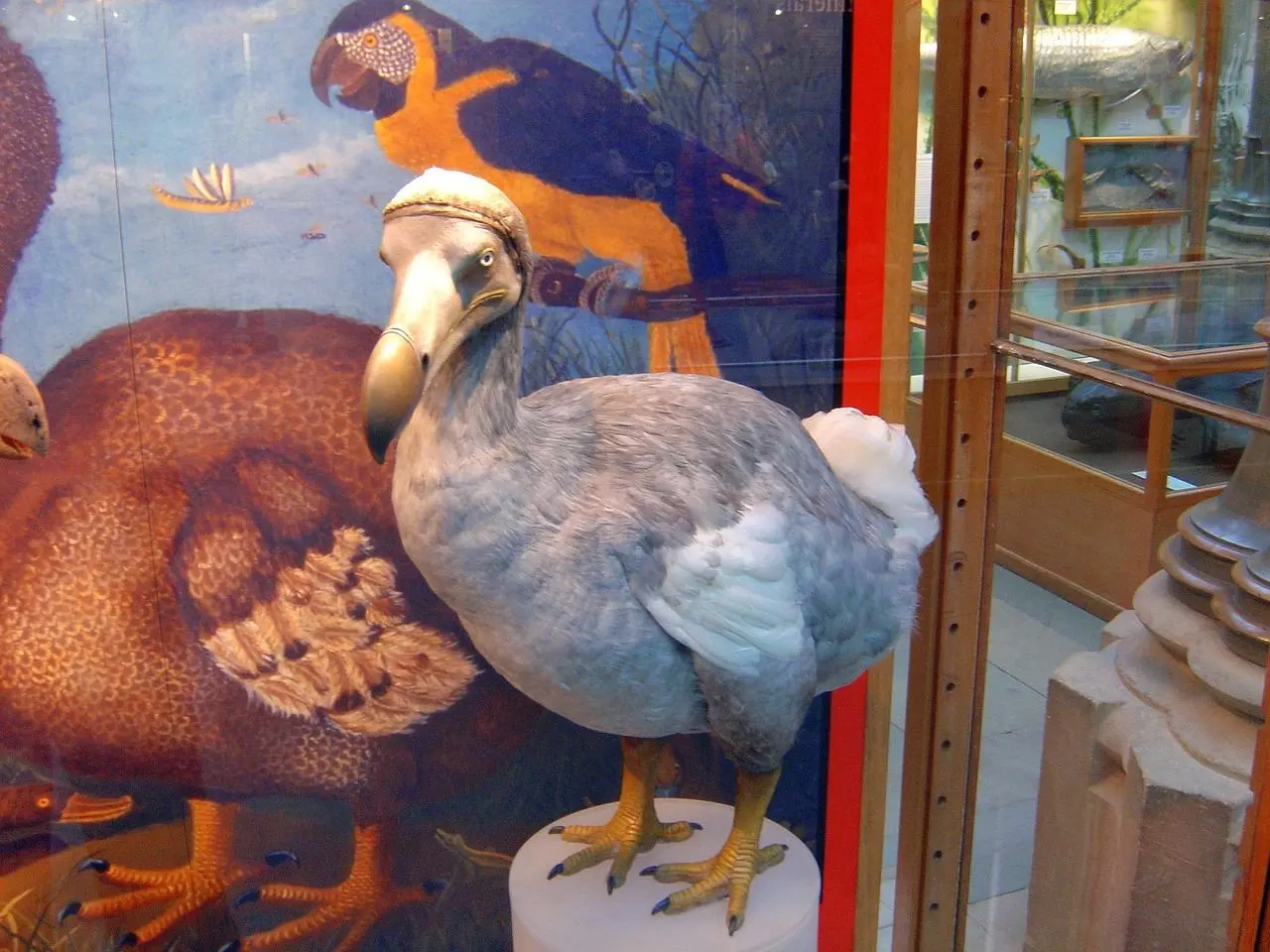
Many famous images of the dodo are poor guides to the living bird. The first descriptions from sailors and other visitors showed grey, swift birds, while the best-known European paintings show plump, slow ones, as EBSCO explains.

A single painting did much of the damage. Roelandt Savery’s rendition, created around 1626, showed a fat, stumpy bird, and later artists copied it, according to National Geographic. His nephew Jan Savery painted a well-known dodo in 1651 that now hangs at the Ashmolean Museum in Oxford, per EBSCO.

There is also a quick test for spotting bad reconstructions. Large gaping nostrils mean the artist worked from a long-dead specimen, because sketches of live and recently dead birds show small nostrils, as National Geographic points out.

What the dodo’s story shows

EBSCO describes the dodo as the first animal whose extinction was known to have been caused by human beings, which is why it became a symbol of the loss of species, according to EBSCO Research Starters. Its end came within a century of its first meeting with people.

The dodo vanished entirely, but some species survive only under human care, a situation covered in our guide to extinct in the wild animals. For a comparison with an animal that vanished in a very different age, our explainer on when did woolly mammoths go extinct is a useful next read.

Frequently asked questions

Was the dodo actually stupid?

Show answer

Probably not. The bird had lived in a predator-free environment before humans arrived, so it was easily captured, and its innocence may have looked like stupidity, according to EBSCO.

Where does the name “dodo” come from?

Show answer

Its exact origin is unknown. One possibility is the Portuguese word duodo, meaning foolish, while the more commonly accepted source is the Dutch dodoor, meaning sluggard, as EBSCO sets out.

Were live dodos ever shown in Europe?

Show answer

Yes, though the evidence is thin. National Geographic says only two confirmed accounts exist of live dodos displayed there, and that Roelandt Savery probably never saw a living one.

What did dodos eat that fascinated the public?

Show answer

The dodo had an unusual habit of swallowing stones, probably to help digestion, and the public found it fascinating, according to EBSCO Research Starters.
Extinct Species

  • Ice Age Megafauna and Why They Died Out

    Ice Age Megafauna and Why They Died Out

    If you’re curious about ice age animals that went extinct, the short answer is that mammoths, giant sloths and moas vanished mostly after humans arrived. Climate probably played a smaller part, though scientists still debate it. This guide is part of our wider look at extinct animals, and it focuses on the big mammals and…

  • From Billions to None: The Passenger Pigeon

    From Billions to None: The Passenger Pigeon

    You may wonder how the most numerous bird in North America vanished. Passenger pigeon extinction came from hunting and forest loss hitting a species already prone to boom-and-bust swings, ending with Martha in 1914. This page looks at one species in depth, and the hub guide to extinct animals places it alongside others. These figures…

  • Steller’s Sea Cow: Gone Within 27 Years of Discovery

    Steller’s Sea Cow: Gone Within 27 Years of Discovery

    You may wonder how a giant that big vanished so fast. The Steller’s sea cow extinction took under three decades after its discovery, mainly because hunters killed far more than slow-breeding herds could replace. This page is part of the site’s collection of extinct animals, and it follows one marine giant of the North Pacific.…